
Melasma
Treat. Support. Protect
Dealing with stubborn pigmentation that flares with heat or hormones?
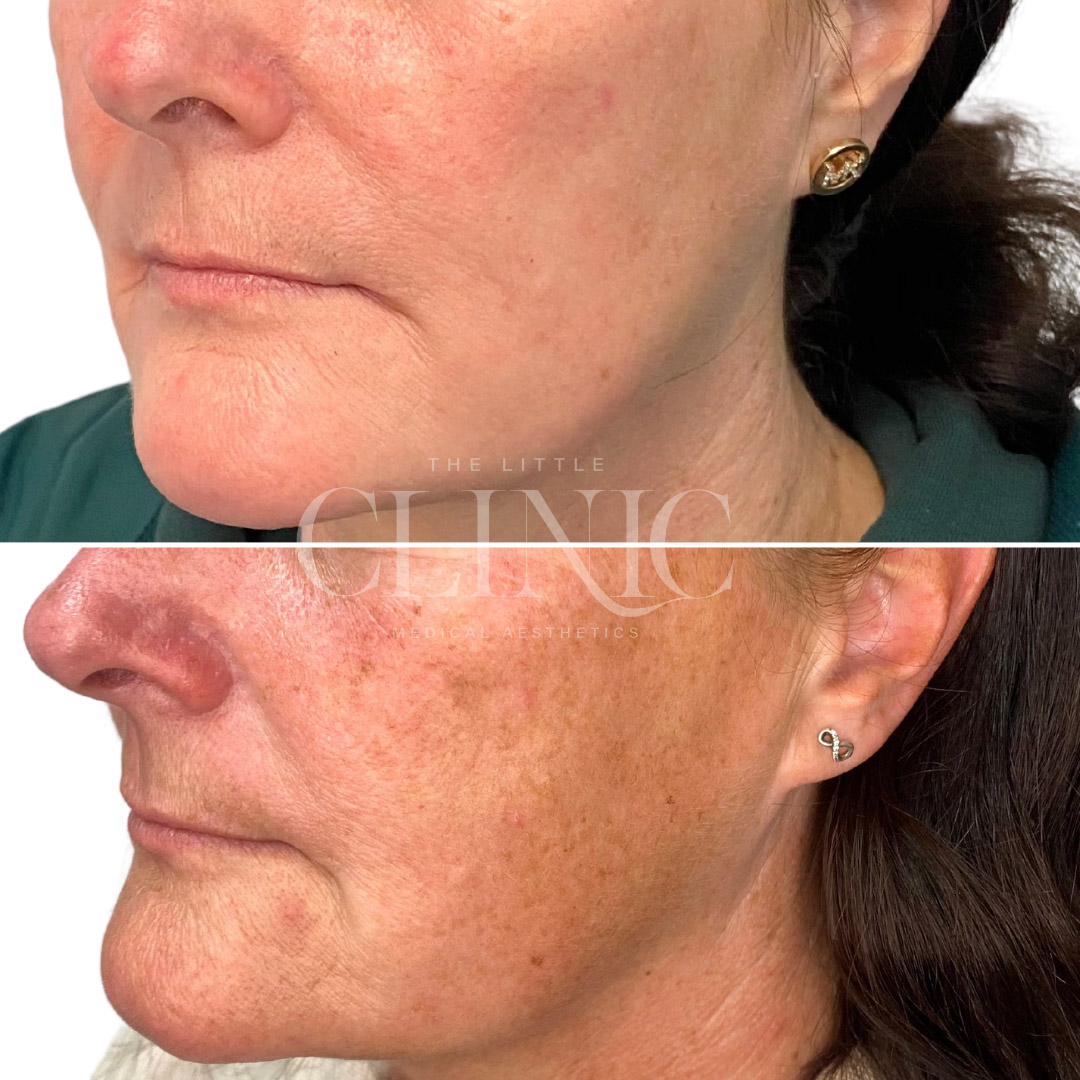
Melasma can be deeply frustrating — showing up as patchy, symmetrical pigment that won’t budge with typical treatments.
We take a thoughtful, medical approach — using a combination of pigment-reducing treatments, skin barrier support, and long-term care strategies to manage and improve melasma safely.
This is gentle, intelligent skin care — not a quick fix, but a lasting one.
No. of Treatments
Individual
Procedure Time
30 Minutes
Results
12-18 weeks
Risk & Complications
Swelling, bruising and infection (rare)
Recovery Time
48 hours – 1 week
Back to Work
Immediate
No. of Treatments
Individual
Procedure Time
30 Minutes
Results
12-18 weeks
Risk & Complications
Swelling, bruising and infection (rare)
Recovery Time
48 hours – 1 week
Back to Work
Immediate
What are the benefits of treating melasma?
Treating melasma requires patience and expertise, but the results can be transformative for both your skin and your confidence. When we manage melasma effectively, you’ll see gradual fading of those stubborn dark patches that have been bothering you.
Beyond the visible improvements, you’ll gain a better understanding of your triggers and how to protect your progress long-term. This knowledge is invaluable because melasma is a condition that needs ongoing management rather than a one-time fix.
You’ll also notice overall skin improvement — better texture, brightness, and clarity — as the treatments we use for melasma often benefit your entire complexion, not just the pigmented areas.
What is melasma and what causes it?
Melasma is a specific type of pigmentation that’s closely linked to hormonal changes. It typically appears as symmetrical patches of darker skin, most commonly on the forehead, cheeks, upper lip, and chin — areas that get the most sun exposure.
This condition is much more common in women and often develops or worsens during pregnancy (sometimes called “the mask of pregnancy”), menopause, or when taking hormonal contraceptives or HRT. The combination of hormones and sun exposure creates the perfect storm for melasma development.
Unlike other types of pigmentation, melasma can be particularly stubborn and prone to returning if not managed properly. This is why it requires a specialized, long-term approach rather than standard pigmentation treatments.
What treatments are available?
Melasma is one of the more challenging forms of pigmentation to treat, but with the right approach and patience, significant improvement is definitely possible.
Professional treatments:
- Carefully selected medical-grade chemical peels that won’t aggravate melasma
- Gentle microneedling protocols designed specifically for hormonally-triggered pigmentation
- Advanced treatments that target melanin production without causing irritation
Medical-grade skincare:
- Specialized routines with proven ingredients like hydroquinone, tretinoin, and kojic acid
- Products specifically formulated to fade melasma without causing the irritation that can make it worse
- Ongoing adjustments to your routine as your skin responds and improves
Long-term management:
- Comprehensive sun protection strategies (this is absolutely crucial)
- Lifestyle and trigger management
- Maintenance protocols to prevent recurrence
Why is melasma difficult to treat?
Melasma is notoriously challenging because it’s driven by internal hormonal factors, not just external sun damage. This means that even with perfect treatment, it can return or worsen if your hormonal triggers remain active.
Many treatments that work well for other types of pigmentation can actually make melasma worse by causing irritation or inflammation. This is why melasma requires a gentler, more specialized approach than standard pigmentation treatments.
The condition also tends to be deeper in the skin than surface pigmentation, which means it takes longer to see results and requires more patience with the treatment process. Success with melasma is measured in months, not weeks.


Why Choose The Little Clinic?
My patient’s need’s are my priority, my aim is to not only help achieve your goals with your treatment but improve the quality of your life in a more meaningful way.
I take pride in the service I provide to my patients and provide a service I would like to receive as a patient myself.
I take time and listen to my patients so I can work with them and build a trusting relationship. My aim is to help you look and feel better about yourself and your appearance so you can go out into the world with more confidence, self love and feel you are glowing within your own skin. Looking and feeling the best version of yourself, in a natural harmonious way.